SN No. 121
Eastern Free State
Spring | 14.11.2026
H:25℃ / L:13℃ - Rainy conditions through out the day, wind gusts up to 21km/h.
Hello, and welcome back.
This week has been particularly exciting on my end, with two of my projects being presented on international platforms in collaboration with Suburbia Contemporary. Alternative-Kidz is part of a two-person exhibition at LOOP Festival 2026 in Barcelona, Spain, while The Young Shall Grow (i) is showing at the OVNi Biennale of the Image in Motion in Nice, France.
You can follow @studionxumalo on Instagram for updates on these projects, upcoming exhibitions and other developments, but now, lets go back to my journey of exploring natural landscapes…
Wandering Nxumalo - From Observation Towards Participation.
By October and November 2025, my attention had begun gravitating towards the Eastern Free State, partly as a result of visits to my family in the region. I began thinking about transitioning into a different landscape, one with a distinct character and a long, significant agricultural history in South Africa. The Eastern Free State gradually emerged as the next region in which I would continue this exploration, marking the beginning of another chapter in my journey.
Between October and November 2025, I gradually relocated to the Eastern Free State, Bethlehem township to be specific. Situated approximately 30 kilometres from Clarens, a scenic small town nestled in the foothills of the Maluti Mountains, Bethlehem offered a convenient base from which to explore the surrounding landscape. It was the mountains, in particular, that attracted me to this part of the country and ultimately influenced my decision to make it my next point of exploration.
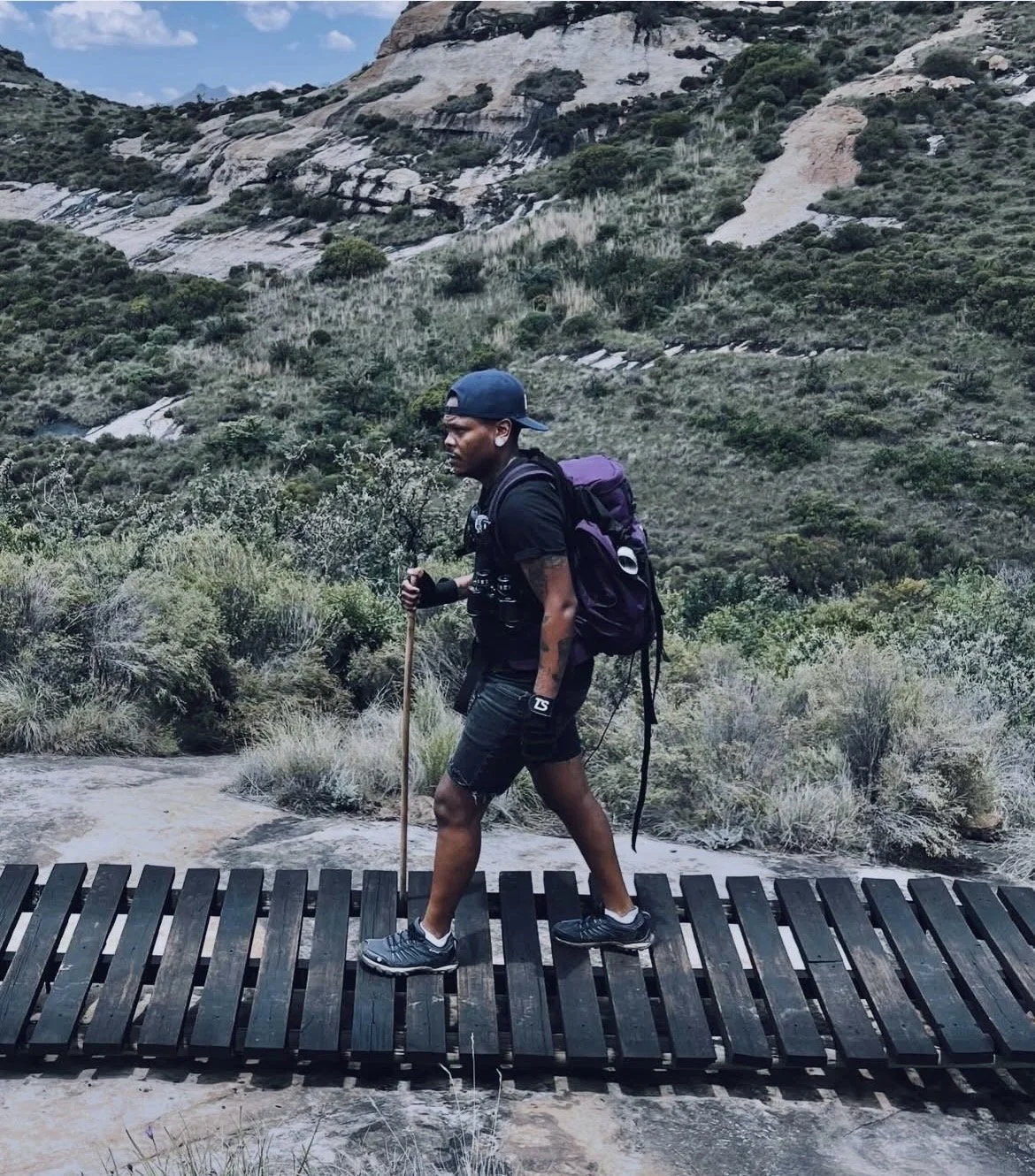
Between November 2025 and March 2026, I resumed the routine I had established at Klipriviersberg Nature Reserve, driving to Clarens Nature Reserve to observe and occasionally photograph the landscape. On other days, I would take walks in and around Bethlehem, sometimes venturing further towards the outskirts of town. There, I began observing the farmlands that stretched alongside the region's tarred roads and secondary and tertiary gravel routes. These walks gradually prompted a growing interest in agricultural activities. I would encounter vast, seemingly quiet stretches of farmland that, despite their apparent stillness, clearly indicated signs of active production. Interestingly, however, I rarely encountered the kind of visible human activity one might typically associate with an industrial workplace in a city like Johannesburg.
The Maluti foothills were simultaneously stirring a curiosity that went beyond my initial fascination with their hills and rock formations. I began to feel the need to ask more questions about what I was looking at, climbing and photographing. The more frequently I returned to the mountains, the more I became aware of my inability to articulate what I was witnessing. I lacked not only the vocabulary to describe the different rock formations, soil compositions and vegetation, but also a deeper understanding of what these textures and formations represented.
The more I reflected on this lack of understanding, the more disconnected I began to feel from the landscape, despite spending considerable time within it and experiencing the physical demands of walking several kilometres up and down the hills. A growing sense that I needed to deepen my connection with the natural environment became increasingly difficult to ignore. I began to believe that one of the most practical ways of entering these landscapes would be through farmwork: by contributing my physical strength and willingness to learn, particularly since I did not yet possess a specialised skill that might otherwise allow me to enter this field. Photography and video were no longer sufficient as entry points, not because I lacked the ability to make photographs, but because my growing concern had shifted towards acquiring a closer relationship with the natural landscape. Labour, therefore, began to feel like a more meaningful way forward.
South Africa's high unemployment rate was another reality I increasingly found myself thinking about as I continued walking around Bethlehem. I would often encounter young people, as well as middle-aged men and women, spending time around town, seemingly without formal employment. At the same time, I was contemplating the possibility of finding a place to work in one of the country's farming regions, despite having no background in agriculture whatsoever. Perhaps I was being overly ambitious. How does one approach an entirely unfamiliar industry, with no practical experience or specialised agricultural skills, and expect to find a place within it? These were some of the thoughts that occupied my mind during those walks. Meanwhile, I continued putting together proposals for employment opportunities, although I received little to no response. Eventually, I turned my attention towards searching for farm volunteering programmes in the Free State. It was during this search that I came across Waaipoort Farm and Permaculture Centre.
I put together a proposal letter, accompanied by references, and received a response within a week, in February 2026. On 1 April 2026, I set off on a drive further into the Eastern Free State, at the Thabo Mofutsanyana District, arriving at Waaipoort Farm in the small town of Rosendal.